US$11.5 million reaches Somali pastoralists through DRIVE as Takaful coverage grows
Government, partners and insurers meet in Mogadishu after two successive payout seasons and set priorities for expanding protection
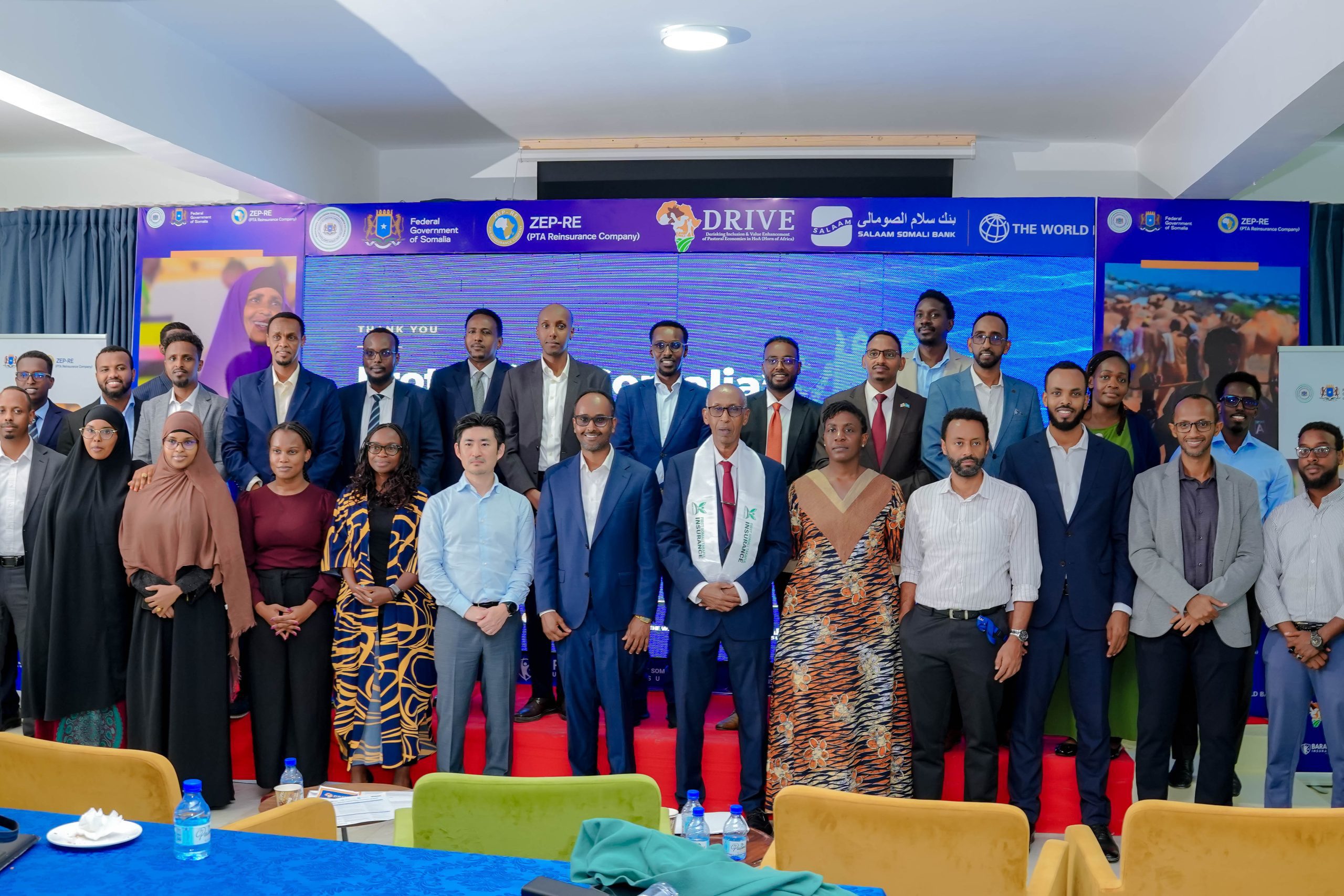
Mogadishu, Somalia, 18 November 2026 – Somali pastoralists received US$11.5 million in livestock Takaful payouts, savings incentives, profit sharing and surplus distributions over the past 12 months through the De-Risking, Inclusion and Value Enhancement of Pastoral Economies (DRIVE) project.
The figure was announced at a ceremony in Mogadishu organised by the Ministry of Livestock, Forestry and Range in collaboration with ZEP-RE and participating Takaful operators. ZEP-RE presented a ceremonial cheque representing the payments to the Government, with pastoralist representatives present on behalf of beneficiaries.
The total includes payouts, bonuses and surplus distribution from two successive drought seasons. In March 2026, about 17,185 pastoralists received US$3.88 million following the October–December 2025 season. In August, another 17,373 pastoralists received US$3.43 million following the April–June 2026 season. Payments went directly to mobile money wallets and bank accounts.
Demand for the cover continues to grow. Takaful operators enrolled more than 11,000 policies for the current season, exceeding the target of 10,000.
DRIVE is part of the Federal Government of Somalia’s efforts to protect pastoral livelihoods from drought. It helps families build savings and take out livestock Takaful cover before the season begins. The World Bank finances the project, while ZEP-RE implements its financial services component with the Government and private-sector providers.
Axmed Cismaan Aadan, a pastoralist who used his payout to buy water and fodder for his herd, said: “When we received the insurance payout, we knew it would change our lives. Before, we were affected by drought and could not afford anything, but now we have gotten water and fodder for our livestock.”
Suleiman Sheikh Omar, Director General of the Ministry of Finance, Federal Government of Somalia, said: “Livestock is the backbone of Somalia’s economy and a critical source of household income. When pasture and water disappear, pastoralists can lose years of investment in one season. Giving families access to savings and livestock Takaful means they have resources to act when drought hits.”
The project is also extending access to formal financial services. Salaam Somali Bank said more than 180,000 pastoralists have been banked and insured through the initiative. Working with the Central Bank of Somalia, the bank developed an approach to opening basic accounts for pastoralists using identification collected during insurance enrolment. Its teams have travelled to remote communities, including parts of Middle Shabelle, while payments are delivered through bank and mobile channels.
Dr. Aden Derow, Director of Animal Production at the Ministry of Livestock, Forestry and Range, said livestock insurance needs to work alongside animal health, feed and fodder, water, markets and early warning. He called for wider coverage and continued investment in the systems that pastoralists depend on.
The ceremony was followed by a roundtable convened with the Global Shield Secretariat on what Somalia needs to build a stronger and more inclusive Takaful market.
Insurance remains a small part of Somalia’s economy. The Ministry of Finance said premiums amount to little more than 0.1 per cent of GDP. The Central Bank of Somalia licensed four Takaful operators in 2026 under the country’s new Takaful framework. Somalia became a Global Shield country in 2024 and has since requested support to strengthen its domestic Takaful sector and climate and disaster risk financing.
Participants identified public awareness, access to capital, better data, technical capacity and stronger reinsurance capacity as priorities for expanding the market. They also heard lessons from Pakistan’s Securities and Exchange Commission on microinsurance, including the role of regulation, digital distribution, data and consumer awareness.
The discussion also highlighted the importance of building more insurance and reinsurance capacity within Africa. Participants said stronger local insurers and regional reinsurers could help expand coverage, develop technical expertise and retain more insurance business within the continent.
Isaku Endo, Senior Financial Sector Specialist at the World Bank and DRIVE Task Team Leader, said: “This project could not happen without the partnership of government, the private sector, ZEP-RE and the other organisations involved. What matters now is that this continues, because the impact is on people’s lives in Somalia.”
Rhoda Rubaiza, DRIVE Project Lead at ZEP-RE, said: “The project worked the way it was supposed to. When there was a severe drought, it was able to respond with significant payments. Timeliness is key.”
-ENDS-
About DRIVE
The De-Risking, Inclusion and Value Enhancement of Pastoral Economies (DRIVE) project operates in Djibouti, Ethiopia, Kenya and Somalia, with financing from the World Bank. ZEP-RE implements the financial services component in Ethiopia, Kenya and Somalia, working with governments and partners to help pastoral families build savings and access livestock insurance or Takaful. In Djibouti, this component supports drought protection through sovereign insurance.
National agencies implement the livestock value chains and trade facilitation component, helping pastoralists reach more buyers, encourage private investment in the livestock sector and support livestock trade across borders.
Media contacts
Richard Ryaganda, Senior Communications Officer (rryaganda@zep-re.com)